

Introduction
Bass guitars hold a vital role in the world of music. From driving rock beats to creating lush jazz soundscapes, these instruments are foundational across various genres. Musicians often rely on the bass to provide rhythm, harmony, and depth. Consequently, the choice between a 4-string and a 5-string bass can significantly influence performance and sound.
The debate surrounding the 4-string vs 5-string bass has been ongoing among players and enthusiasts alike. While some argue for the simplicity and classic feel of a 4-string instrument, others champion the extended range and versatility offered by a 5-string bass. Each has its supporters who cite different advantages, depending on the music genres they engage in. Bass guitar techniques may differ significantly based on the number of strings instrument players choose.
This article aims to explore the differences and similarities between these two popular bass guitars. Understanding these aspects will assist musicians in making informed decisions about their instruments. Through careful examination of sound, playability, and technical capabilities, we hope to shine a light on what each type of bass brings to the table. A well-informed choice can lead to enhanced musical expression and satisfaction.
Understanding the 4-String Bass Guitar

History and Development of the 4-String Electric bass
The 4-string Electric bass emerged in the early 1950s, designed to fill the gap between the double bass and guitar. Leo Fender introduced the Precision Bass in 1951, which featured a solid body and an innovative pickup system. This transformed how bass players approached their craft. Over the decades, various modifications and designs have enhanced playability and sound. As the instrument evolved, manufacturers introduced models with different materials and electronics, yet the fundamental 4-string configuration remained popular.
Common Genres and Styles Using 4-String Bass
Various music genres prominently feature the 4-string bass guitar. Rock, blues, jazz, and funk heavily rely on its rhythmic foundation. Punk and pop music benefit from its straightforward approach and punchy sound. Additionally, country and metal genres also utilize the 4-string for its versatility. This instrument serves well across a wide spectrum of musical styles, adapting to the needs of both beginners and seasoned professionals.
Typical Tuning and Range
Standard tuning for a 4-string bass is E1, A1, D2, and G2, ranging from the lowest E note to a G note above middle C. This provides a solid bass foundation that works well in both rhythm-heavy settings and melodic lines. Many players appreciate this tuning for its resonance and presence in a mix. Alternative tunings exist, but the standard remains the most common choice among bassists.
Popular Bass Guitar Techniques Used with 4-String Bass
Numerous techniques can enhance performance on the 4-string bass. Fingerstyle playing allows for a versatile attack and nuanced control. Slapping and popping create an aggressive, punchy sound, especially popular in funk and rock genres. Techniques such as harmonics and tapping add further layers to the player’s expression. Each method contributes to the 4-string’s reputation for versatility, enabling musicians to explore a wide range of sounds and styles.
Understanding the 5-String Bass Guitar
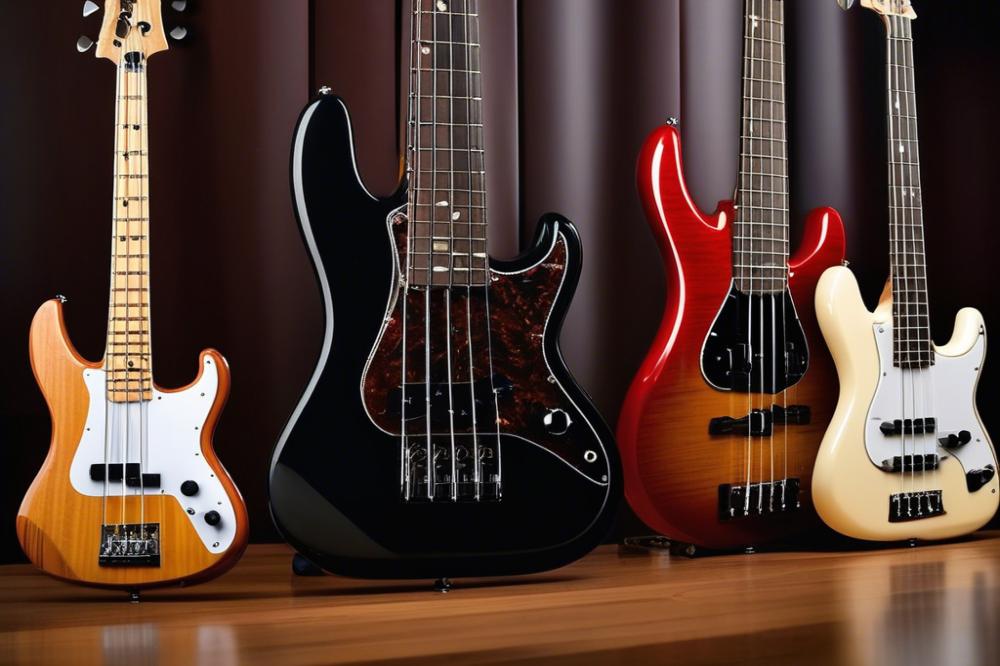
History and Development of the 5-String Electric Bass
The 5-string bass guitar emerged in the mid-1990s, evolving from traditional 4-string designs. This innovation addressed the demand for lower pitches. Musicians sought instruments that could extend their range and versatility. Builders like Ibanez and Warwick played pivotal roles in popularizing this model. By incorporating an additional low B string, the 5-string bass allowed bassists to explore new sonic territories.
Common Genres and Styles Using 5-String Bass
Many music genres benefit from the characteristics of a 5-string bass. Jazz, metal, and funk are just a few styles where this instrument flourishes. In jazz, musicians often utilize the extended range to create complex lines. Metal bands appreciate the low B string for its heavy, driving presence. Funk players enjoy the added depth, crafting rhythmically gripping bass lines.
Typical Tuning and Range
Standard tuning for a 5-string bass is B-E-A-D-G, starting from the lowest string. This tuning provides bassists with an expanded range compared to the typical 4-string setup. It allows access to deeper notes often required in various genres. The lowest string enables players to navigate lower octaves, enhancing harmonic versatility. This additional range can substantially alter a musician’s approach to songwriting and improvisation.
Popular Bass Guitar Techniques Used with 5-String Bass
Various techniques come into play when using a 5-string bass. Slap and pop styles exploit the instrument’s range effectively, creating percussive tones. Fingerstyle playing benefits from the broader fretboard, allowing easier navigation of notes. Tapping techniques flourish here, lending additional textures to compositions. Moreover, players often experiment with harmonics to craft unique soundscapes.
Instrument Comparison: Features and Specifications

Construction and Materials Used
Four-string and five-string electric bass guitars often employ similar materials, such as mahogany or alder for the body. This commonality yields a solid foundation for sound production. However, the addition of a fifth string typically necessitates a slightly thicker neck for support. Maple and rosewood are popular choices for fingerboards, impacting the instrument’s tonal qualities. Regardless of the number of strings, craftsmanship plays a vital role in determining overall sound and durability.
Neck Design and Fingerboard Considerations
Neck construction significantly influences playability. Four-string basses usually feature a traditional C-shape neck, which appeals to beginners and seasoned players alike. In contrast, five-string versions might have a wider neck to accommodate the additional string. This can present challenges in fingerboard techniques, particularly for those unaccustomed to wider spacing. Furthermore, the fretboard radius can affect how notes are articulated across various music genres.
Weight and Balance Differences
Weight varies between the two types of instruments. Typically, five-string basses weigh slightly more due to added hardware and the extended neck. Musicians frequently express concerns regarding balance, especially when playing for extended periods. A well-balanced instrument can ease fatigue and improve performance. Four-string models usually have an easier feel, making them appealing for long sessions or live gigs.
Electronics and Sound Capabilities
Electronics found in both designs can range from simple to complex. Four-string basses may come equipped with standard single-coil pickups, delivering a clean, crisp sound. Conversely, five-string variants often feature humbuckers to capture the broad tonal range available with the low B-string. This enhanced versatility allows for exploration of diverse bass guitar techniques. Tone woods and pickup configuration ultimately shape the character each instrument brings to different music genres.
Performance and Playability
Differences in Handling and Comfort
When comparing the two Types of bass guitars, handling and comfort are crucial factors. Players often find that the 4-string model feels more straightforward. Fewer strings can lead to less muscle fatigue during extended sessions. Conversely, a 5-string bass offers more tonal versatility. It allows the player to reach lower notes without switching instruments. Some musicians may experience a steeper learning curve. A player accustomed to four strings might need time to adjust to the additional one.
Fretting Techniques and Finger Placement
Fretting techniques differ notably between these two instruments. Four-string players often use simpler finger placements due to fewer strings. Techniques such as slapping and popping can be executed without intricate adjustments. On the other hand, 5-string players must adapt their finger placement. This can enhance their ability to execute complex bass guitar techniques. The extra string encourages the exploration of different patterns. Improvisation might come more naturally for players utilizing five strings.
Scale Length and Its Effect on Playability
Scale length significantly influences playability for both types of electric bass guitars. Typically, 5-string instruments may feature a longer scale to accommodate the additional string. This can affect string tension and tonal quality. Longer scales often require more finger stretch, which some players find challenging. Shorter scales, common in 4-string models, often lend themselves to easier playability. This can make transitions between notes smoother. Individual preference plays a large role in determining which scale is more suited.
Solo vs Ensemble Playing Considerations
When discussing solo versus ensemble playing, preferences vary among musicians. A 4-string bass can shine in genres where simplicity is key, such as rock or punk. The limited range may complement other instruments effectively. In contrast, a 5-string model provides more options for solos and complex arrangements. It can fill out the sound in jazz or progressive rock settings. Some players may opt for a 5-string for its ability to cover broader musical genres. These considerations deeply affect a player’s choice based on their style and the ensemble’s needs.
Music Genres and Their Preferred Bass Types
Analysis of genres favoring 4-string bass
The 4-string bass guitar has been a staple in many popular music genres. Rock and roll often relies on this instrument’s traditional design. Many songs emphasize a fundamental low-end, which a four-string can deliver with precision. Additionally, funk and classic jazz musicians appreciate its ability to produce tight, punchy lines. Techniques such as slap and pop emerge prominently within these genres, emphasizing the instrument’s rhythmic capabilities. Notably, its familiarity allows musicians to focus on creativity rather than technical complexity.
Analysis of genres favoring 5-string bass
5-string bass guitars have carved out a significant niche in progressive rock and metal. The extra string extends the range, enabling players to reach lower notes with ease. This feature is particularly valuable in genres that emphasize heavy low-end tones. Jazz fusion has also embraced the five-string for its adaptability to intricate solos. Here, complex bass guitar techniques can shine, showcasing versatility and expanding melodic possibilities. By adding a B string, players enhance their harmonic exploration, leading to unique compositions.
Hybrid genres and the versatility of both
Hybrid genres often blend elements of both four-string and five-string basses. Genres like alternative rock or electronic music may switch between the two types based on song context. The adaptability of musicians allows for experimentation with different sounds. In these cases, players draw from both instruments to enrich their compositions. This versatility ensures that bass lines remain engaging and innovative. As a result, the lines between genres blur, allowing for greater artistic expression.
Influential bassists and their instrument choices
Several influential bassists exemplify the instrument comparison between four and five strings. For instance, Paul McCartney predominantly used a four-string bass during his tenure with The Beatles. His melodic playing defined a generation. In contrast, musicians like Victor Wooten shine with five-string instruments. Their techniques often incorporate tapping and harmonics, showcasing the range available on this type. Each bassist’s choice reflects personal style and genre influence, further shaping perceptions of the electric bass. Ultimately, the preferences of these icons have inspired countless musicians in the ongoing evolution of bass guitar techniques.
Cost and Availability
Price ranges vary significantly between 4-string and 5-string bass guitars. Generally, a 4-string model is more budget-friendly. Entry-level options can start below $200, while higher-end instruments might reach $2,000 or more. In contrast, 5-string basses often command higher prices. You might find decent beginner models starting around $300, with premium versions exceeding $3,000.
Availability of brands and models plays a crucial role in your decision. Most major manufacturers, like Fender or Ibanez, offer both options. Nonetheless, the 4-string bass guitar remains more prevalent in shops and online stores. This abundance means easier access to affordable alternatives, especially for novices.
When considering instruments for various experience levels, it’s vital to recognize that beginners may benefit from starting with a 4-string version. Due to its simplicity, many find it easier to learn fundamental bass guitar techniques on this model. Advanced players often favor a 5-string for versatility. These instruments can accommodate a broader range of music genres, from jazz to metal, making them an appealing choice.
Overall, while the price and availability can influence your selection, it’s essential to reflect on personal playing style. Purchasing decisions should align with your aspirations and technical proficiency. Whenever evaluating options, consider factors such as brand reputation and model features.
Final Thoughts
Summarizing the key distinctions between 4-string and 5-string bass guitars reveals several insights. The primary difference lies in the range of notes accessible. A 5-string model typically offers an extended lower range, enhancing versatility. Conversely, a 4-string version is often lighter and simpler, making it an excellent choice for beginners.
Similarities exist, particularly in technique and playability. Both types allow musicians to explore various genres effectively. Comfort and personal style play crucial roles in deciding which instrument to pursue. Understanding your musical goals is vital.
When considering the right bass for individual needs, prioritize comfort and sound. The choice may also depend on the genres you prefer. Those leaning toward heavy bass lines might appreciate the additional string. On the other hand, a more straightforward approach may be well-suited to traditional rock or jazz styles.
Ultimately, exploring different Types of bass guitars can lead to greater insight. Experimentation will yield personal preferences and potentially new techniques. Remember, ongoing Bass guitar maintenance can enhance performance for either option. Enjoy the journey of finding an instrument that aligns with your unique musical expression!

